 Save
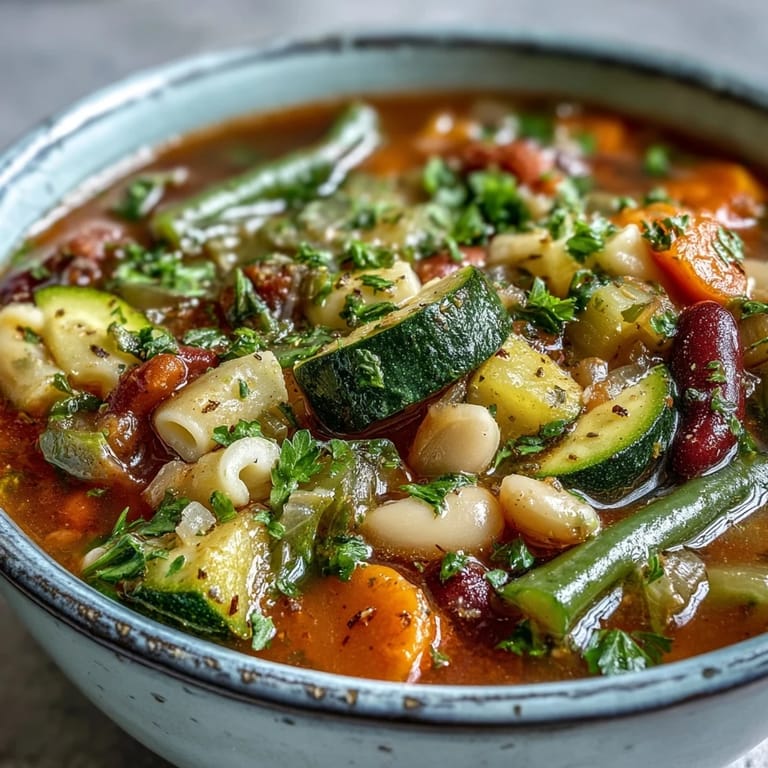
Save The first time I made minestrone, my tiny apartment smelled like an Italian grandmother had moved in. I was recovering from a terrible cold and craved something that felt like a hug in a bowl. My grandmother had always said soup cures everything, so I chopped vegetables with more enthusiasm than technique. That afternoon taught me that minestrone is less about precision and more about patience and letting flavors meld into something magical.
Last winter, my neighbor dropped by during a snowstorm with fresh bread from a local bakery. I had minestrone simmering on the stove, and we ended up sitting at my kitchen table for hours, dipping crusty bread into steaming bowls while watching fat flakes accumulate outside. She asked for the recipe, and I had to laugh because I had barely measured anything. That is the beauty of this soup it adapts to whatever you have and whoever joins you at the table.
Ingredients
- 2 tablespoons olive oil: Extra virgin creates a richer base and adds that authentic Italian foundation
- 1 large onion, diced: Yellow onions offer the best sweetness after caramelizing
- 2 celery stalks, diced: Include some leaves for extra herbaceous flavor
- 2 medium carrots, diced: Fresh carrots, not bagged baby ones, provide better depth
- 2 cloves garlic, minced: Fresh garlic beats pre-minced every single time
- 1 medium zucchini, diced: Do not peel it, the skin holds texture and color
- 1 cup green beans: Fresh green beans hold up better than frozen ones
- 1 cup baby spinach or chopped kale: Add at the very end so it stays vibrant
- 1 can diced tomatoes: Fire-roasted adds a subtle smoky depth
- 6 cups vegetable broth: Low sodium broth lets you control the salt level
- 2 tablespoons tomato paste: This concentrates the tomato flavor beautifully
- 3/4 cup small pasta: Ditalini, shells, or even broken spaghetti work wonderfully
- 1 can cannellini beans: Rinse thoroughly to remove excess sodium and starchy liquid
- 1 teaspoon dried oregano: Mediterranean oregano has more floral notes than Mexican varieties
- 1 teaspoon dried basil: Rub between your fingers before adding to release essential oils
- 1/2 teaspoon dried thyme: A little goes a long way with this potent herb
- 1 bay leaf: Remove before serving, but keep it whole during cooking
- Salt and freshly ground black pepper: Taste at the end, broth brands vary dramatically in saltiness
- 2 tablespoons chopped fresh parsley: Flat leaf parsley has more flavor than curly varieties
Tired of Takeout? 🥡
Get 10 meals you can make faster than delivery arrives. Seriously.
One email. No spam. Unsubscribe anytime.
Instructions
- Build the Foundation:
- Heat olive oil in a large soup pot over medium heat. Add diced onion, celery, and carrots. Sauté for about 5 minutes, stirring occasionally, until the vegetables soften and the onion turns translucent.
- Add More Vegetables:
- Stir in the minced garlic, diced zucchini, and green bean pieces. Cook for another 3 to 4 minutes until the garlic becomes fragrant but take care not to burn it.
- Create the Broth Base:
- Pour in the diced tomatoes with their juices, vegetable broth, and tomato paste. Add oregano, basil, thyme, and the bay leaf. Bring everything to a gentle boil, then reduce heat to low and let it simmer for 15 minutes.
- Cook the Pasta and Beans:
- Add the small pasta and drained cannellini beans. Cook for about 10 minutes, checking occasionally until the pasta reaches al dente texture. The beans should be heated through and starting to break down slightly.
- Add the Final Touches:
- Stir in spinach or kale and chopped parsley. Simmer for just 2 to 3 minutes until the greens wilt perfectly. Remove and discard the bay leaf.
- Season and Serve:
- Taste the soup and season with salt and freshly ground black pepper as needed. Ladle hot soup into bowls and garnish with extra fresh parsley.
 Save
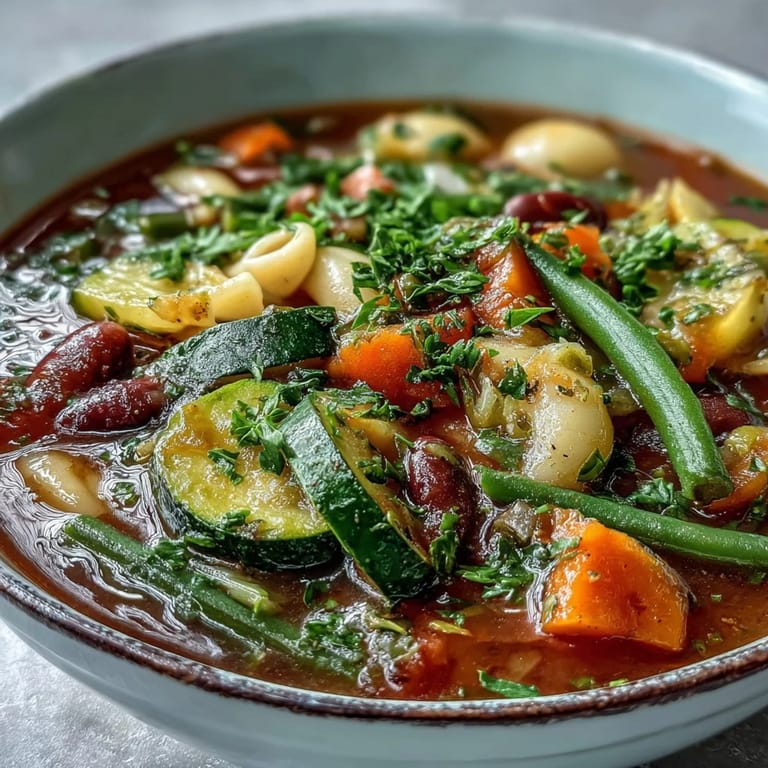
Save There is something deeply satisfying about making minestrone on Sunday and having it ready for a quick lunch throughout the week. My children now request it specifically when the weather turns cold, and watching them slurp up every vegetable they refused to eat separately feels like a small parenting victory. This soup has become part of our family story, one ladle at a time.
Choosing Your Vegetables
The beauty of minestrone lies in its adaptability to whatever vegetables are in season or languishing in your crisper drawer. I have made versions with butternut squash in fall, fresh peas in spring, and even added leftover roasted vegetables that needed a second life. Trust your instincts and what looks fresh at the market.
Making It Your Own
Some nights I add a parmesan cheese rind to the simmering broth for incredible depth, while other times I finish each bowl with a drizzle of high quality olive oil. The base recipe stays consistent, but these small touches make each batch feel unique to that specific moment and craving.
Serving Suggestions
A thick slice of crusty bread rubbed with raw garlic and toasted until golden creates the perfect companion to this hearty soup. I also love serving it alongside a simple green salad dressed with lemon vinaigrette to cut through the richness.
- Grate fresh parmesan over the top just before serving
- Add a splash of balsamic vinegar for brightness
- Keep extra broth handy if you prefer a thinner consistency
 Save
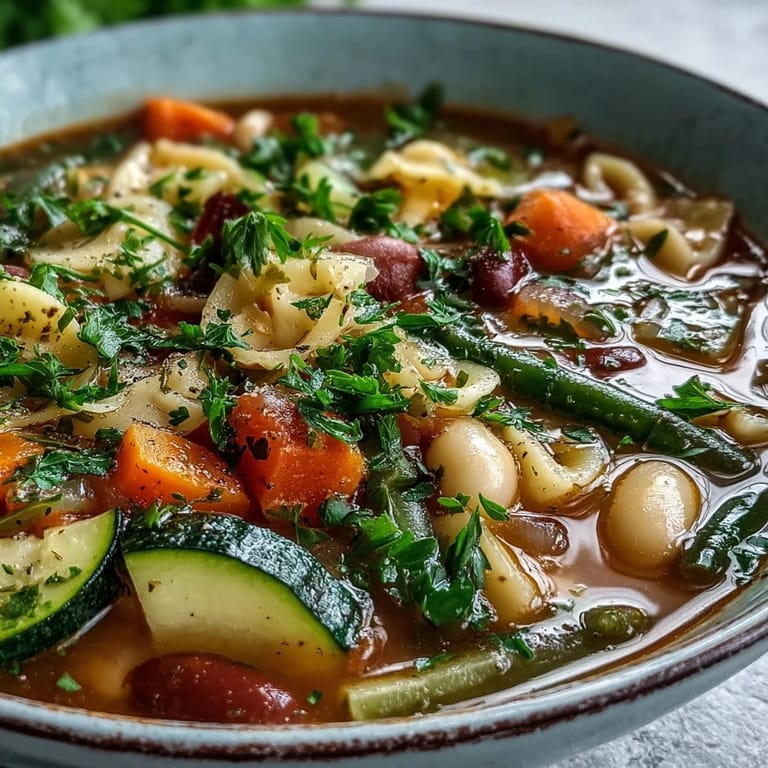
Save Whether you are feeding a crowd or just looking for comfort, this minestrone delivers something deeply nourishing for both body and soul. Every bowl tells a story of simple ingredients transformed into something extraordinary.
Recipe Questions & Answers
- → What vegetables work best in minestrone?
Traditional minestrone includes onions, celery, carrots, zucchini, and green beans. You can adapt based on seasonality—try butternut squash in fall or fresh tomatoes in summer. The key is cutting vegetables into uniform pieces for even cooking.
- → Can I make minestrone soup gluten-free?
Absolutely. Simply substitute the regular pasta with your favorite gluten-free variety—ditalini, elbow macaroni, or small shells work perfectly. Also verify your vegetable broth is certified gluten-free.
- → How long does minestrone soup last in the refrigerator?
Stored in an airtight container, minestrone keeps well for 4-5 days. The pasta will absorb more liquid over time, so you may need to add a splash of broth or water when reheating.
- → Is minestrone better the next day?
Yes. Like many soups and stews, minestrone develops deeper, richer flavors after resting overnight. The herbs and vegetables meld together beautifully, making it ideal for meal prep or making ahead.
- → What type of pasta is traditionally used?
Small shapes like ditalini, elbow macaroni, shells, or tubetti are classic choices. Their size fits perfectly on a spoon and holds onto the flavorful broth. Avoid larger pasta shapes that may overwhelm the soup.
- → Can I freeze minestrone soup?
You can freeze it for up to 3 months, though the pasta texture may soften slightly. For best results, slightly undercook the pasta if planning to freeze, or cook fresh pasta when reheating. Leave off garnish until serving.