 Save
Save The steam from a simmering pot of vegetables has a way of turning a drafty kitchen into a sanctuary. I first made this version on a night when the wind was rattling the windowpanes so loudly I could barely hear the radio. It was a clean out the fridge effort that ended up being the most comforting meal of the winter. The way the squash dissolves just enough to thicken the broth feels like a warm hug. It is now my go to remedy for any grey afternoon.
I once served this to a group of friends who arrived soaked to the bone after a flat tire in the rain. We sat around the kitchen island with mismatched bowls while the air smelled like toasted rosemary and garlic. Nobody cared about their wet shoes because the soup was so vibrant and filling. It turned a miserable evening into a cozy living room picnic that we still talk about today.
Ingredients
- Olive oil: Using a high quality extra virgin oil at the start creates a rich and flavorful foundation for the aromatics.
- Yellow onion, carrots, and celery: This classic trio provides the aromatic base that gives the broth its traditional depth.
- Garlic cloves: Freshly minced garlic adds a punchy fragrance that cuts through the sweetness of the squash.
- Butternut squash: These cubes provide a subtle sweetness and a buttery texture that defines the winter theme.
- Zucchini: Adding this late in the sauté phase ensures it keeps a bit of bite without becoming too soft.
- Fresh kale: Removing the tough stems ensures every green bite is tender and perfectly wilted.
- Diced tomatoes: The acidity in the juices balances the earthy herbs and the savory vegetable broth.
- Cannellini beans: These beans act like little creamy pillows of protein that soak up the tomato broth beautifully.
- Small pasta: Shapes like ditalini or elbow macaroni are perfect for catching small bits of vegetable in every spoonful.
- Vegetable broth: Choosing a low sodium version allows you to control the final seasoning exactly to your liking.
- Dried oregano, thyme, and rosemary: Crushing these herbs between your palms before adding them releases their fragrant oils instantly.
- Crushed red pepper flakes: A tiny pinch adds a background warmth that makes the soup feel even more satisfying.
- Fresh parsley and Parmesan: These finishing touches add a bright pop of color and a salty umami finish.
Tired of Takeout? 🥡
Get 10 meals you can make faster than delivery arrives. Seriously.
One email. No spam. Unsubscribe anytime.
Instructions
- Sauté the base:
- Warm the olive oil in your pot and let the onion, carrots, and celery soften until they are translucent and sweet. This step is the key to building a deep flavor profile from the very beginning.
- Awaken the garlic:
- Stir in the minced garlic for about a minute until the kitchen smells incredible. Be careful to keep the heat moderate so the garlic does not turn bitter or brown.
- Soften the squash:
- Toss the butternut squash and zucchini into the pot to let them pick up the herb infused oil. Stir them occasionally for a few minutes to jumpstart the softening process before adding liquids.
- Simmer the broth:
- Pour in the tomatoes, broth, and water then bring the mixture to a lively boil. Add your dried herbs and red pepper flakes before reducing the heat to a gentle simmer.
- Cook the pasta:
- Drop the beans and pasta directly into the bubbling liquid to let them cook through. The starch from the pasta will naturally thicken the soup as it reaches a tender consistency.
- Wilt the greens:
- Fold in the kale at the very end and watch it turn a vibrant green as it wilts. Give the broth a final taste and adjust with salt and pepper before serving.
 Save
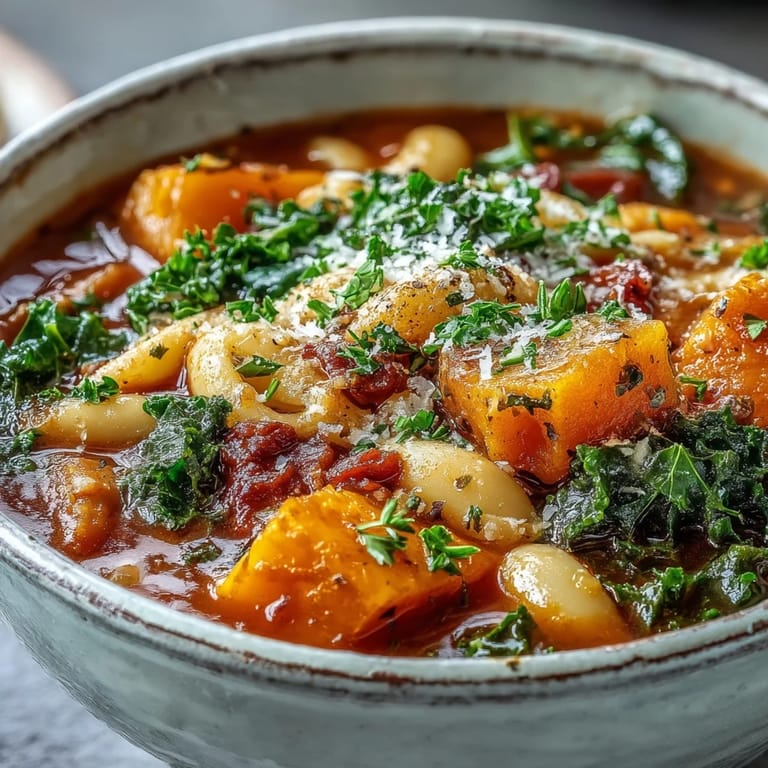
Save There was a winter where I made a double batch of this every Sunday just to have a ritual for the week ahead. Seeing those bright orange squash cubes peeking through the dark green kale always made Monday morning feel a little less daunting. It eventually became the signature flavor of my favorite quiet winter routine.
Developing Deep Flavor
I have learned that the secret to a rich minestrone is not rushing the initial sauté of the vegetables. If you let the onions and carrots properly sweat for the full five to six minutes they release natural sugars. This provides a necessary background sweetness that balances the acidic tomato broth later on.
Choosing Your Greens
While kale is my favorite for its sturdiness, I have experimented with chard and spinach when the garden was leaning that way. Kale holds its shape best if you plan on having leftovers because it does not turn to mush overnight. If you use spinach, wait until the very last second to stir it in.
Serving and Storage
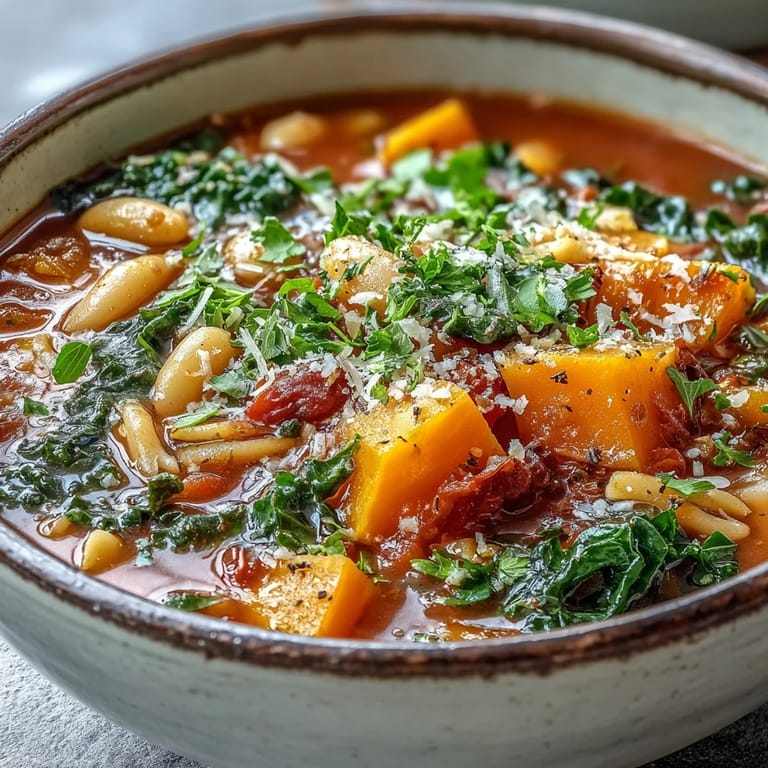
A bowl of soup is only as good as what you put on top right before that first bite. I always keep a wedge of real Parmesan and a crusty loaf of bread nearby to make it feel like a feast. It is the best way to turn a simple bowl into a complete meal.
- Keep extra broth on hand if you are reheating this since the pasta drinks up the liquid.
- A squeeze of fresh lemon juice at the end can brighten the whole pot if it feels too heavy.
- Store any leftovers in glass containers to keep the flavors fresh and the squash intact.
 Save
Save I hope this hearty bowl brings as much warmth to your kitchen as it does to mine. Pull up a chair and enjoy the simple comfort of a slow cooked meal.
Recipe Questions & Answers
- → Can I make this soup ahead of time?
Absolutely. This minestrone actually tastes better after resting overnight as flavors deepen. Store in an airtight container in the refrigerator for up to 4 days. Add a splash of broth when reheating since pasta absorbs liquid.
- → What pasta works best in minestrone?
Small shapes like ditalini, elbow macaroni, or shells are ideal because they cook evenly and fit well on spoons. Gluten-free pasta works too—just monitor cooking time as it may become mushy faster than wheat varieties.
- → Can I freeze this soup?
Yes, though it's best to freeze before adding pasta. Cook vegetables and beans through step 6, cool completely, then freeze for up to 3 months. When ready to serve, thaw and add fresh pasta during the final simmer.
- → How do I make this vegan?
Simply omit the Parmesan cheese or use a dairy-free alternative. The rest of the soup is naturally plant-based, loaded with protein from cannellini beans and carbohydrates from pasta and vegetables.
- → What vegetables can I substitute?
Swap butternut squash for sweet potatoes or pumpkin. Replace kale with spinach or Swiss chard. Other hearty vegetables like green beans, potatoes, or bell peppers also work wonderfully in this versatile soup.