 Save
Save Sunlight streamed through the kitchen window the first time I tackled this lemon curd layer cake, casting little rainbows off a bowl full of edible flowers. The air felt lightly charged, like I was making something that would brighten more than just my day. Zesting lemons filled the room with such cheer I couldn’t help but dance around a little with a wooden spoon in hand. Even the step of whipping cream was accompanied by the soft, rhythmic tap of a mixer, promising pillowy goodness. By the time the final layer settled atop the cake, my apron was dusted with flour and my spirits truly lifted.
I once made this cake for a spring brunch where we ate on the lawn, balancing plates in our laps and plucking pansies off slices. My sister giggled because she thought the cake was almost too pretty to eat. Yet, when the first forkful was tasted, all conversation stopped except for the collective sighs at just how fresh and bright it tasted. The wind tossed a few petals in the grass, and suddenly even the mess felt part of the festive fun. It's a cake that always finds its way into joyful gatherings, whether planned or last minute.
Ingredients
- All-purpose flour: Gives the cake structure, and sifting it first prevents lumps for a tender crumb.
- Baking powder & baking soda: These work together for a high, fluffy rise—just be sure they’re fresh.
- Salt: Balances all that lemony sweetness, so don’t skip it.
- Unsalted butter: Start with room temperature butter for the fluffiest creaming process—it makes all the difference.
- Granulated sugar: Keeps the layers delicately sweet and matches well with tart lemons.
- Eggs: Crucial for both the cake’s richness and the silky curd—bring them to room temp so the batter doesn’t split.
- Lemon zest & juice: This is where the zing comes in—use fresh lemons, and don’t be shy with the zest for extra brightness.
- Vanilla extract: Adds a cozy aroma that softens all the citrus tang.
- Whole milk: Room temperature milk makes the batter smooth and ensures even baking.
- Powdered sugar: Sweetens the whipped cream without making it grainy.
- Heavy cream: Cold cream whips up fluffiest—chill the bowl for extra insurance.
- Assorted edible flowers: Always choose unsprayed, edible blooms—they transform the cake into a garden centerpiece.
Tired of Takeout? 🥡
Get 10 meals you can make faster than delivery arrives. Seriously.
One email. No spam. Unsubscribe anytime.
Instructions
- Prepare your pans and preheat:
- Turn on the oven to 350°F (175°C); grease and line three 8-inch round pans, tracing the bottoms with parchment for confidence against sticking.
- Mix the dry ingredients:
- Sift the flour, baking powder, baking soda, and salt together in a bowl—the simple act of whisking makes everything feel lighter.
- Cream the butter and sugar:
- Use your mixer to whip the softened butter and sugar until the mixture is pale and as fluffy as clouds; it takes about 3 minutes.
- Add eggs and flavor:
- Add eggs one by one, letting each blend fully, then stir in the lemon zest, juice, and vanilla so the batter smells like fresh lemonade.
- Bring it all together:
- Alternately add the flour mixture and milk in three rounds, starting and ending with flour; scrape the bowl and stir just until combined.
- Bake the cakes:
- Split the batter between the prepared pans, level the tops, and bake for 25–28 minutes, watching the centers for a toothpick to come out clean.
- Cool completely:
- Let the cakes cool in their pans for 10 minutes before flipping them onto racks to finish cooling; warm cakes will melt your frosting, so patience pays.
- Make the lemon curd:
- In a saucepan, whisk eggs, sugar, zest, and lemon juice together, then cook over medium, stirring constantly until thickened and luxurious, about 5–7 minutes.
- Finish the curd:
- Take off the heat and stir in cold butter until it melts in; press plastic wrap directly onto the curd and chill until needed.
- Whip up the frosting:
- Beat the cold heavy cream, powdered sugar, and vanilla until stiff peaks form; feel free to taste, but try not to eat it all yet.
- Layer and fill:
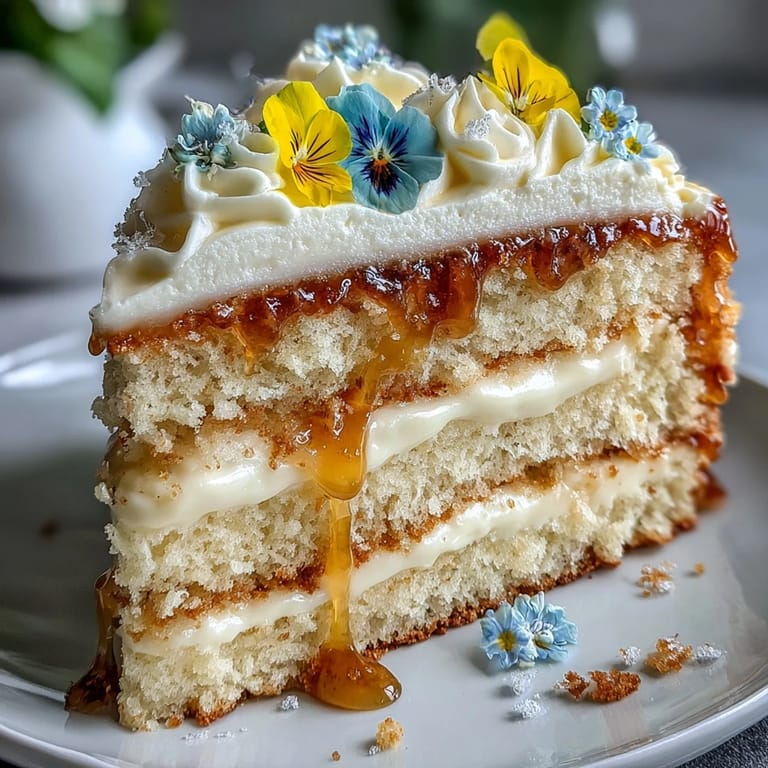
- Place one cake layer on your serving plate, spread with whipped cream, dab generous spoonfuls of lemon curd, and repeat—layer by lovely layer.
- Final touches:
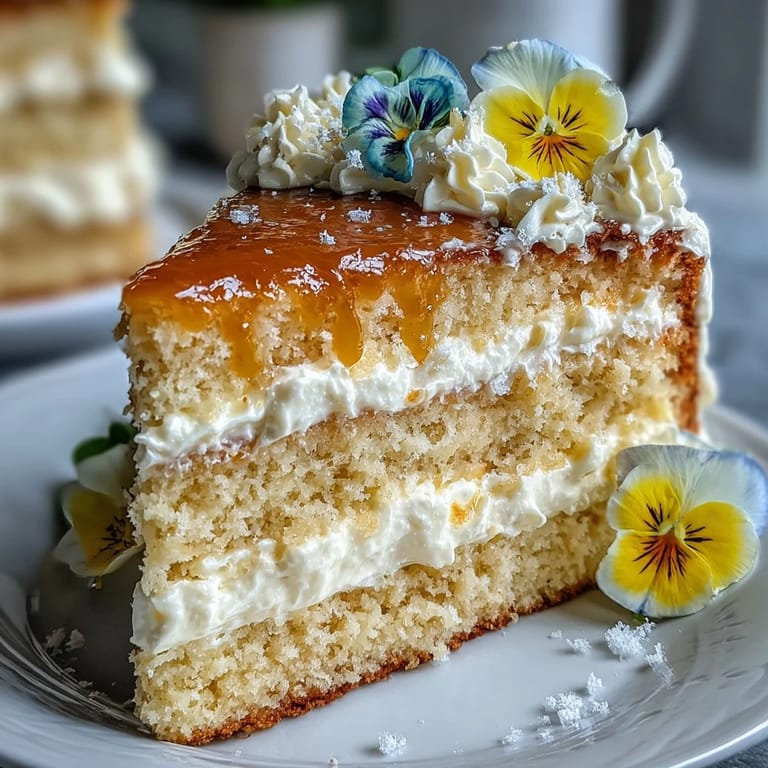
- Frost the top and sides with the remaining whipped cream, and, just before serving, gently press edible flowers all over for a show-stopping finish.
 Save
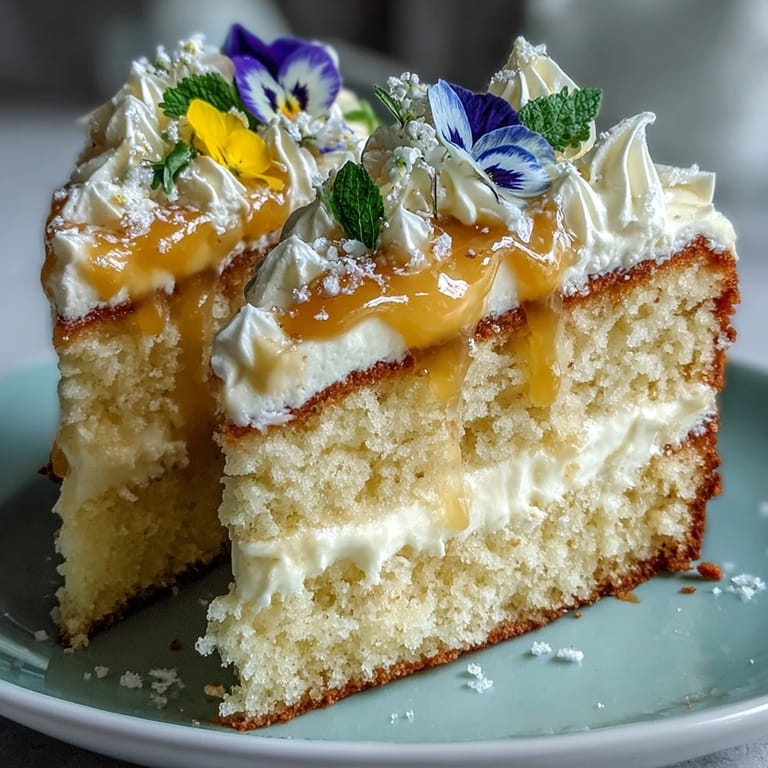
Save Watching my mom take the first bite—her fork breaking through a crown of cream, lemon curd swirling into spongy cake—felt like more than dessert. In the quiet afterwards, we both smiled over coffee, suddenly aware this cake had become a little tradition of our own.
How to Choose and Use Edible Flowers
It’s tempting to grab any colorful blossom, but only use edible varieties like pansies, violas, nasturtiums, or roses you know are pesticide-free. I learned the hard way that some store-bought flowers are sprayed or intended for floral arrangements only, not eating—the difference is huge. Always rinse flowers gently, pat dry, and add them to the cake just before serving so they don’t wilt or discolor. Plucking petals and scattering them on top can turn even a lopsided cake into something beautiful without any cake decorating skill.
Making Lemon Curd Without Tears
My first try at lemon curd was a near miss: too hot, and it turned clumpy; too cool, and it never thickened. The sweet spot is steady, gentle heat and constant whisking—watch for the mixture to coat the back of a spoon, then pull it off immediately. Pressing plastic wrap right onto its surface keeps it silk-smooth. Once chilled, it’s like a spoonful of sunshine between cake layers.
Cake Assembly: No Stress, All Joy
Setting everything out before you start—cooled cakes, whipped cream, and lemon curd—makes assembly fun instead of frantic. Sliding each layer into place can be a bit wobbly (I always stand back to admire the leaning tower before smoothing it straight). If your frosting gets messy or the curd oozes, just call it “rustic” and keep going—it always tastes incredible.
- Chill the assembled cake if making it ahead, but always add flowers last minute.
- A long offset spatula can be your best friend for smooth sides.
- Keep a damp cloth handy to swipe away sticky fingerprints.
 Save
Save Bake this cake and you just might find yourself looking for reasons to celebrate all year round. The first slice always goes to the person you love most.
Recipe Questions & Answers
- → How do I prevent the lemon curd from curdling?
Cook the curd gently over low–medium heat, stirring constantly until it thickens and coats the back of a spoon. Remove from heat promptly, stir in butter to smooth, and strain if any bits form. Chilling with plastic wrap touching the surface prevents a skin.
- → How can I keep whipped cream stable between layers?
Use very cold heavy cream and a chilled bowl, beat to stiff peaks, and sweeten with powdered sugar. For extra hold, whisk in a little stabilized ingredient (gelatin or mascarpone/cream cheese) or use a small amount of cornstarch-sugar blend.
- → What is the best way to prep components ahead of time?
Bake the cake layers a day early and wrap them tightly once cool. Make the lemon curd and chill it covered. Store both chilled and assemble on the day of serving to preserve texture and fresh appearance.
- → Are all edible flowers safe to use?
Only use food-grade, pesticide-free flowers from a trusted source. Common-safe choices include pansies, violas, nasturtiums and certain rose petals. Avoid unfamiliar garden blooms unless confirmed edible.
- → How do I prevent layers from slipping during assembly?
Chill layers before stacking, apply a thin crumb coat or a dab of whipped cream to act as glue, then spread curd and cream evenly. Chill briefly between additions to let fillings set and reduce sliding.
- → Can I add fresh berries between the layers?
Yes—fresh berries add brightness. Pat them dry to minimize extra moisture, layer sparingly between whipped cream and curd, and consider mixing berries with a bit of curd to keep them from sinking.