 Save
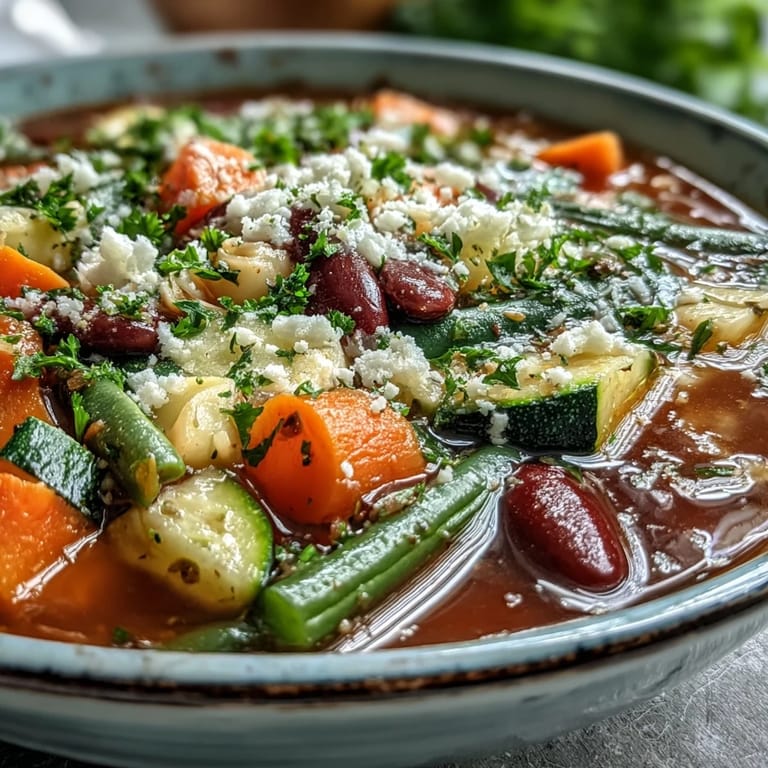
Save The kitchen was drafty that first winter I attempted minestrone, and I kept running back and forth to the thermostat while the vegetables sputtered in the pot. My grandmother had mentioned something about soffritto being the foundation, but I was too impatient to let the onions properly caramelize. Still, that slightly rushed version tasted like comfort itself when I finally sat down with a steaming bowl. Over time I learned to slow down, to let the aromatics do their work before rushing ahead to the good part. Now the smell of celery and onions hitting olive oil instantly transports me back to that tiny apartment kitchen.
I brought a batch to a friend who was recovering from surgery, and she sent me the most heartfelt text message about how something so simple could feel so healing. That's when I understood this soup isn't just ingredients thrown together. It's about the care that goes into chopping each vegetable evenly, about tasting and adjusting until the balance feels right. There's something deeply satisfying about watching a pot transform from separate components into something cohesive and nourishing.
Ingredients
- 2 tablespoons olive oil: Use a good quality extra virgin olive oil here since it forms the flavor foundation of your soup
- 1 large onion, diced: Yellow onions work beautifully, though white onions add a slightly sharper bite
- 2 carrots, diced: Try to cut them the same size as your onion pieces for even cooking
- 2 celery stalks, diced: Include some of the tender inner leaves for extra celery flavor
- 2 cloves garlic, minced: Add it toward the end of vegetable sautéing so it doesnt burn and turn bitter
- 1 medium zucchini, diced: Summer squash works here too if zucchini isnt available
- 1 cup green beans, chopped: Fresh green beans hold their shape better than frozen ones
- 2 cups chopped spinach or kale: Kale adds heartiness while spinach wilts quickly into the broth
- 1 can (14 oz) diced tomatoes: Fire-roasted tomatoes add a lovely depth, but regular work perfectly fine
- 6 cups vegetable broth: Low-sodium broth lets you control the salt level precisely
- 1 teaspoon dried oregano: Dried herbs actually work better than fresh here since theyll cook longer
- 1 teaspoon dried basil: Rub the dried herbs between your fingers before adding to release their oils
- 1/2 teaspoon dried thyme: This earthy herb rounds out the Italian flavor profile beautifully
- 1 bay leaf: Remove it before serving though nobody wants to bite into it
- Salt and pepper, to taste: Season gradually and taste as you go
- 3/4 cup small pasta: Ditalini is traditional but elbows or small shells catch all the flavors nicely
- 1 can (15 oz) cannellini beans: These creamy white beans practically melt into the soup
- 1 can (15 oz) red kidney beans: Rinse them thoroughly to remove the starchy canning liquid
- Freshly grated Parmesan cheese: A little goes a long way for finishing
- Chopped fresh parsley: Adds a bright fresh contrast to the rich broth
- Extra virgin olive oil: A final drizzle makes everything glisten and taste luxurious
Tired of Takeout? 🥡
Get 10 meals you can make faster than delivery arrives. Seriously.
One email. No spam. Unsubscribe anytime.
Instructions
- Build your flavor base:
- Heat olive oil in a large pot over medium heat, then add onion, carrots, and celery, sautéing for 5-6 minutes until softened and fragrant
- Add the next layer of vegetables:
- Stir in garlic, zucchini, and green beans, cooking for 3-4 minutes until everything starts to soften slightly
- Create the broth:
- Add diced tomatoes, vegetable broth, oregano, basil, thyme, bay leaf, salt, and pepper, then bring everything to a gentle boil
- Let it simmer:
- Reduce heat to low, cover, and cook for 15 minutes to let all those flavors meld together
- Add the hearty elements:
- Stir in pasta and both types of beans, then simmer uncovered for 10-12 minutes until pasta is al dente
- Finish with greens:
- Add spinach or kale and cook for 2-3 minutes until just wilted, then remove and discard the bay leaf
- Final seasoning check:
- Taste your soup and add more salt or pepper if needed
- Serve it up:
- Ladle hot soup into bowls and top with Parmesan, parsley, and a drizzle of olive oil if you like
 Save
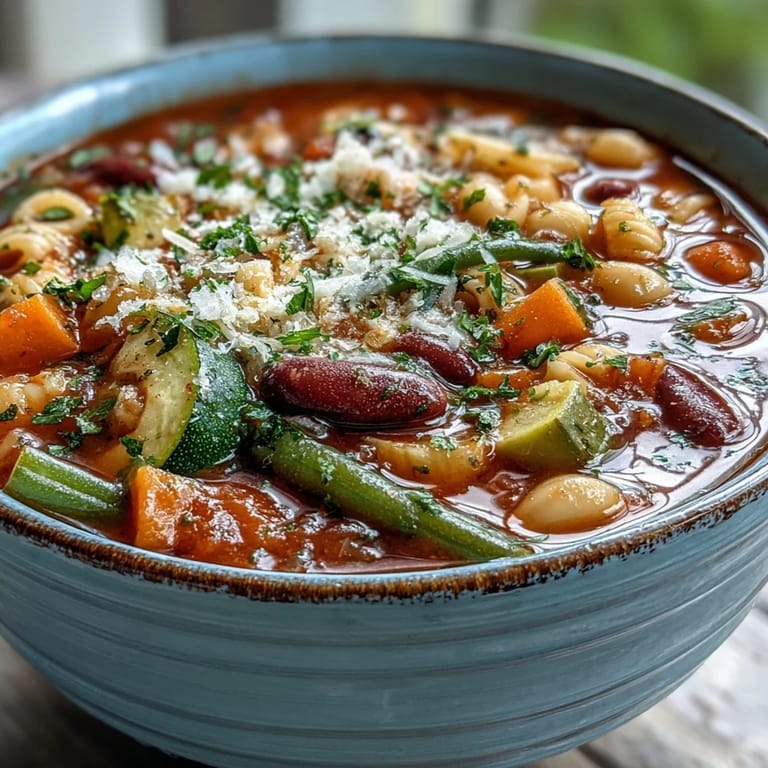
Save My neighbor caught me stirring a pot through the open window one evening and actually came over with a loaf of crusty bread. We ended up eating together at her kitchen table, talking long past sunset while our bowls emptied. That's the magic of this soup somehow it always pulls people toward the table and keeps them there.
Making It Your Own
The beauty of minestrone lies in its adaptability. I've made versions with cabbage in winter and fresh peas in spring, each variation becoming someone's new favorite. The template stays the same but the character shifts with whatever looks good at the market.
The Pasta Question
Cooking pasta directly in the soup thickens the broth naturally as starches release into the liquid. If you prefer a thinner soup, cook pasta separately and add portions to each bowl. Both methods are completely valid personal preference wins here.
Storage & Meal Prep
This soup keeps beautifully in the refrigerator for up to five days and freezes well for three months if you omit the pasta. The flavors deepen and marry over time, making it ideal for weekend batch cooking. I often double the recipe and portion it into glass containers for grab and go lunches all week.
- Let the soup cool completely before refrigerating or freezing
- If meal prepping, store pasta separately and add when reheating
- Thin leftover soup with a splash of water or broth when reheating
 Save
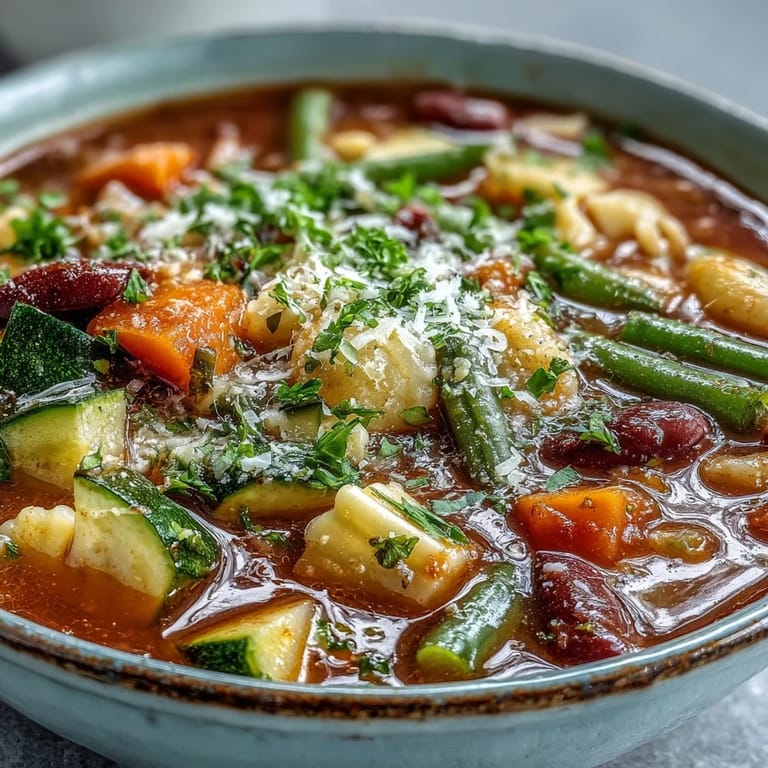
Save There's always room at the table for another bowl of minestrone and another story to share. Simple food has a way of creating the most meaningful moments.
Recipe Questions & Answers
- → What vegetables go best in minestrone?
Traditional minestrone includes onions, carrots, celery, zucchini, green beans, and leafy greens like spinach or kale. You can also add potatoes, cabbage, or peas based on seasonal availability.
- → Which pasta shape works best?
Small pasta shapes like ditalini, elbow macaroni, or small shells are ideal. Their size fits well on a spoon and holds onto the flavorful broth while maintaining texture during simmering.
- → Can I make this vegan?
Absolutely. Simply omit the Parmesan cheese garnish or substitute with a plant-based alternative. The soup base relies on vegetables and olive oil, making it naturally dairy-free.
- → How long does minestrone keep?
Stored in an airtight container, minestrone keeps for 4-5 days in the refrigerator. The flavors often develop and improve after a day or two. Add fresh pasta when reheating if it becomes too soft.
- → Can I freeze this soup?
Yes, minestrone freezes well for up to 3 months. Consider slightly undercooking the pasta before freezing, as it will continue to soften when reheated. Leave space in containers for liquid expansion.
- → What's the difference between minestrone and other vegetable soups?
Minestrone specifically includes pasta and beans alongside vegetables in a tomato-based broth. This protein-rich combination makes it more substantial than lighter vegetable soups, reflecting its origins as a peasant dish designed to feed families affordably.