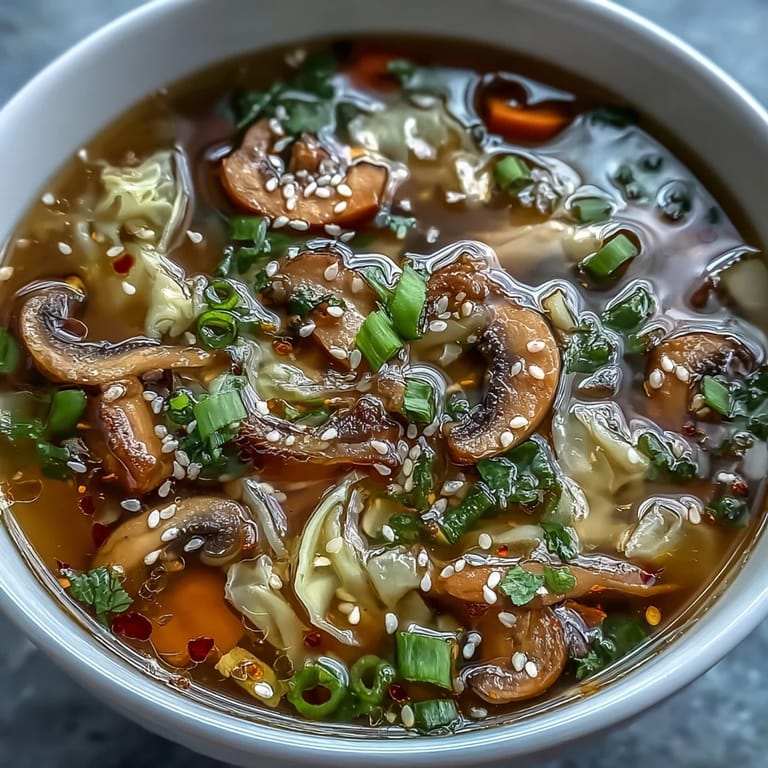
 Save
Save There's a particular kind of cold that makes you crave something warm that actually heals, not just fills your belly. Years ago, during a particularly gray January, a friend brought over a steaming bowl of ginger-miso soup, and I watched the steam curl up while she told me it was the Japanese secret to getting through winter. That first sip—bright with ginger, deeply savory with miso—changed how I thought about soup entirely. Now it's become my ritual on those days when everything feels a little too much.
I made this for my partner when he came home with a cold, and I remember him sitting at the kitchen table, shoulders hunched, looking miserable. By the second spoonful, he sat up straighter. He didn't say much, just kept eating quietly, and that felt like enough. Sometimes food doesn't need to be fancy or complicated to matter.
Ingredients
- Water or low-sodium vegetable broth (6 cups): Use broth if you want instant flavor, but water works beautifully too and lets the ginger and miso shine without competing notes.
- Fresh ginger (2-inch piece, thinly sliced): The thinner you slice it, the faster it infuses—I learned this after making too-subtle soup one too many times, and now I shave it almost paper-thin.
- Garlic cloves (2, thinly sliced): Sliced rather than minced gives you little flavor pockets that soften as you eat; it feels more intentional somehow.
- White or yellow miso paste (2 tablespoons): This is your umami anchor, but it's also alive with probiotics, so you'll never boil it after adding—that's the rule that matters.
- Napa cabbage (1 cup, thinly sliced): It becomes silky and almost translucent when it hits the hot broth, and it's mild enough not to overpower the delicate ginger flavor.
- Carrot (1 medium, julienned): Thin matchsticks cook in minutes and add sweetness that balances the miso's saltiness.
- Shiitake mushrooms (1 cup, stemmed and sliced): These are worth seeking out because they bring an earthy depth that button mushrooms simply can't match, though you can absolutely use what you have.
- Scallions (2, sliced): Save these for garnish; they taste completely different raw and bright than wilted in the broth.
- Toasted sesame seeds (1 tablespoon): Buy them already toasted and you've saved yourself a step, but if you toast them yourself, that nutty smell is worth the extra minute.
- Fresh cilantro or parsley (1 tablespoon, chopped, optional): Cilantro brings a citrusy spark, while parsley is more grounding—choose based on your mood.
- Chili oil or chili flakes (1 teaspoon, optional): A tiny drizzle transforms the whole bowl into something with a little attitude.
- Silken tofu (200 g, cubed, optional): It melts almost imperceptibly into the broth, adding protein without density.
- Soba or rice noodles (100 g cooked, optional): Cook these separately so they don't cloud your broth, and add them just before serving if you want noodles.
Tired of Takeout? 🥡
Get 10 meals you can make faster than delivery arrives. Seriously.
One email. No spam. Unsubscribe anytime.
Instructions
- Start your broth base:
- Bring water or vegetable broth to a gentle simmer in a large pot—you want little bubbles rising, not a rolling boil that will scatter all your attention. Pour enough to fill most of your pot without crowding.
- Infuse with ginger and garlic:
- Add your thinly sliced ginger and garlic to the simmering broth and let them dance around for 10 minutes. You'll notice the broth turning a pale gold, and that's when you know it's working.
- Add the vegetables:
- Slip in your napa cabbage, carrot, and shiitake mushrooms, and simmer for another 5 to 7 minutes until the vegetables soften but still hold their shape. Taste a carrot slice; it should be tender enough to bite through easily.
- Temper the miso (this is important):
- Remove the pot from heat—this is crucial, and I mean it. In a small bowl, add your miso paste, then ladle some of that hot broth into the bowl with the miso and whisk until it's completely smooth with no lumps. This technique, called tempering, keeps the miso's good bacteria and probiotics alive instead of killing them with direct heat.
- Combine and warm through:
- Stir your miso mixture back into the pot gently, making sure it's evenly distributed. If you're using tofu or cooked noodles, add them now and let everything warm for about 2 minutes, just until heated through.
- Serve with intention:
- Ladle the soup into bowls—make sure each gets some vegetables and broth—then crown each bowl with scallions, sesame seeds, herbs if you're using them, and a small drizzle of chili oil if you want that final spark. Serve right away while it's still steaming.
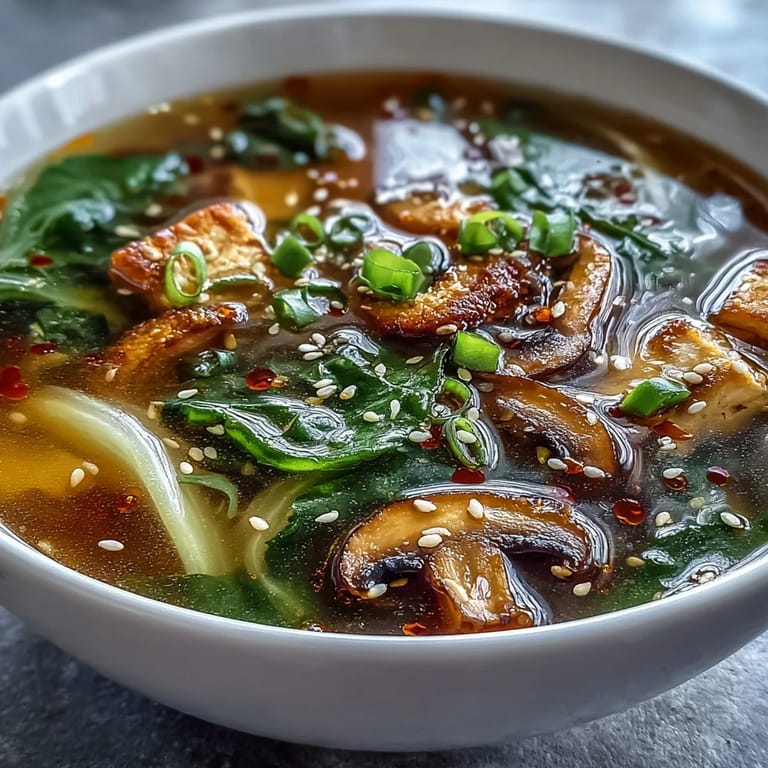 Save
Save One winter evening, I made this soup for myself on a night when I felt overwhelmed by everything, and something about standing over the pot, watching the ginger turn the broth golden, made me feel like I was doing something right. It wasn't about the ingredients or the technique—it was about the act of making something warm for myself when I needed it most.
The Miso Magic Explained
Miso is fermented soybean paste, and that fermentation is where the real alchemy happens. It's packed with umami, that savory fifth taste that makes your brain go quiet and satisfied, but it's also alive with beneficial bacteria that support your gut. When you temper it into the broth instead of boiling it, you're preserving all that goodness. I used to add it straight to the pot, and the soup was fine, but once I learned to respect the heat sensitivity, it became something I actually looked forward to eating.
Why Ginger Works as a Warming Spice
Fresh ginger isn't just flavor—it's also a warming agent that actually helps your body generate heat from within, which is why so many traditional winter soups feature it. There's something almost medicinal about it, but in a way that tastes good, not remedial. I've started using it in almost everything from October through March, and I can't imagine getting through the cold months without that sharp, clean brightness.
Making It Your Own
This soup has a skeleton, but your kitchen is the place where it comes alive. Some nights I add a dash of soy sauce or tamari for extra depth and saltiness, and other nights I let the miso be the whole show. You might swap mushroom varieties depending on what looks good at your market, or throw in bok choy, spinach, or even daikon if you want more vegetable presence. The formula stays the same, but the details become yours.
- Add a splash of soy sauce or tamari if you want the soup to taste more assertively savory and umami-forward.
- Keep silken tofu in your pantry for nights when you want a little more protein without heaviness, or skip it entirely if it's not your thing.
- Cook your noodles separately if you're using them, so they don't break down and cloud your beautiful clear broth.
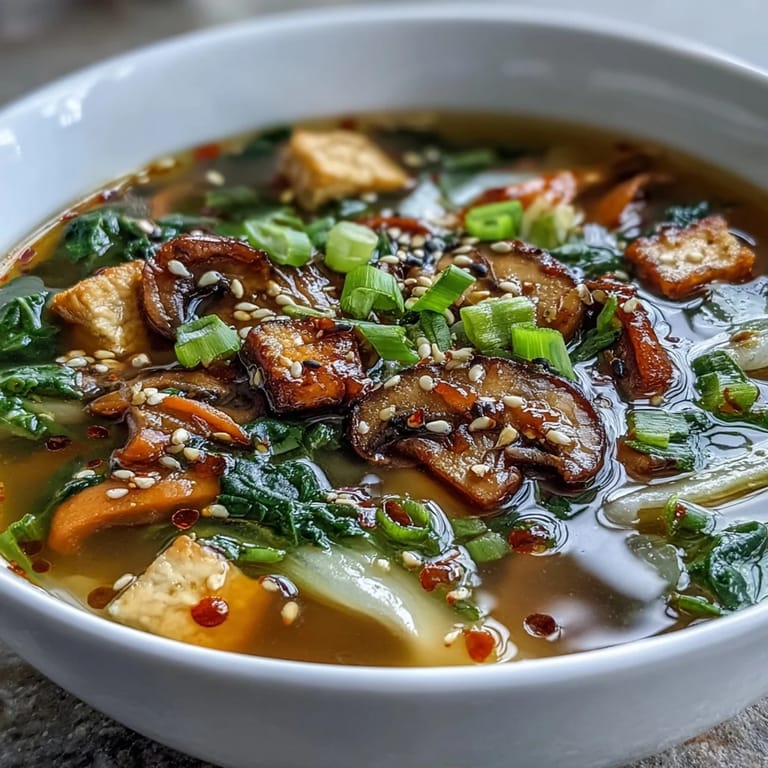 Save
Save This soup has become my answer to almost everything—a cold, a bad day, a night when I need to feel grounded. It's simple enough not to intimidate, but thoughtful enough to feel like medicine.
Recipe Questions & Answers
- → How do I preserve the probiotics in miso?
Always remove the soup from heat before stirring in the miso paste. Whisk it with a small amount of hot broth first, then add it to the pot. Never boil after adding miso, as high temperatures destroy beneficial probiotics.
- → Can I make this soup gluten-free?
Yes, use vegetable broth and verify that your miso paste is certified gluten-free. Skip soba noodles unless they're specifically made with 100% buckwheat, or substitute with rice noodles.
- → What vegetables work best in this soup?
Napa cabbage, carrots, and shiitake mushrooms are classic choices, but bok choy, spinach, or daikon radish also work beautifully. Use whatever winter vegetables you have on hand for a comforting bowl.
- → How long will this soup keep in the refrigerator?
Store in an airtight container for up to 3 days. Reheat gently over low heat, avoiding boiling to protect the miso's beneficial enzymes. The flavors often deepen after sitting overnight.
- → Can I freeze ginger miso soup?
It's best to freeze the broth and vegetables before adding miso. Freeze in portions for up to 2 months. Thaw overnight, reheat, then stir in fresh miso paste just before serving.