 Save
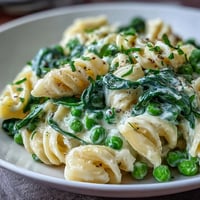
Save Last April, I stood in my kitchen staring at a farmers market haul that was getting too cheerful to ignore. Bright green asparagus, snappy green beans, and sweet peas were practically begging to be used together. I threw them into a pasta dish on a whim, and my roommate paused mid-bite to ask what I'd done differently. The spring vegetables had transformed a weeknight dinner into something that felt like a celebration.
I made this for my sister when she visited last month, and she kept saying it tasted like something from a restaurant. We sat at the counter eating straight from the pan while catching up, and she asked for the recipe before she even finished her plate. Now she sends me photos every time she makes it, usually with some vegetable variation based on what she found at her local market.
Ingredients
- 350 g (12 oz) penne pasta: The ridges catch the light sauce perfectly, but any short pasta works here
- 200 g (7 oz) asparagus, trimmed and cut into pieces: Fresh asparagus has the best flavor, but frozen works in a pinch
- 150 g (1 cup) fresh or frozen peas: Frozen peas are actually perfect here since they're flash-frozen at peak sweetness
- 150 g (1 cup) green beans, trimmed and cut: Look for beans that snap when you bend them
- 2 tbsp olive oil: This creates the base for sautéing the garlic and vegetables
- 3 cloves garlic, finely minced: Fresh garlic matters here, pre-minced jar garlic lacks the punch
- 60 ml (1/4 cup) vegetable broth: This helps deglaze the pan and adds depth
- 120 ml (1/2 cup) heavy cream: Half-and-half works for a lighter version
- 60 g (2/3 cup) freshly grated Parmesan cheese: Buy a wedge and grate it yourself, pre-grated has anti-caking agents
- 1/2 tsp freshly ground black pepper: Freshly cracked makes a noticeable difference
- 1/4 tsp salt: Adjust this at the end since Parmesan is naturally salty
- Zest of 1 lemon: This brightens the whole dish and cuts through the cream
- 1 tbsp fresh lemon juice: Add this right at the end to maintain its acidity
- Extra Parmesan and fresh herbs: Basil or parsley add a fresh finish and color contrast
Tired of Takeout? 🥡
Get 10 meals you can make faster than delivery arrives. Seriously.
One email. No spam. Unsubscribe anytime.
Instructions
- Boil the pasta:
- Bring a large pot of salted water to a boil and cook the penne according to package directions until it's al dente. Before draining, scoop out 120 ml (1/2 cup) of the starchy pasta water and set it aside.
- Sauté the garlic:
- Heat olive oil in a large skillet over medium heat and add the minced garlic. Let it cook for just 1 minute until fragrant, watching carefully so it doesn't brown.
- Cook the vegetables:
- Add the asparagus pieces, green beans, and peas to the skillet. Sauté them for 3 to 4 minutes until they're just tender but still hold their bright green color.
- Add the broth:
- Pour in the vegetable broth and let it simmer for 2 minutes. This step deglazes the pan and starts building a flavorful base for the sauce.
- Make the sauce:
- Reduce the heat to low and stir in the heavy cream and 60 g of grated Parmesan. Keep stirring gently until the cheese melts completely and the sauce becomes smooth and silky.
- Combine everything:
- Add the cooked penne to the skillet and toss it thoroughly to coat every piece with sauce. Add some of the reserved pasta water if needed to reach the right consistency.
- Season the dish:
- Sprinkle in the black pepper, salt, lemon zest, and lemon juice. Mix everything well and taste to adjust the seasoning before serving.
- Plate and garnish:
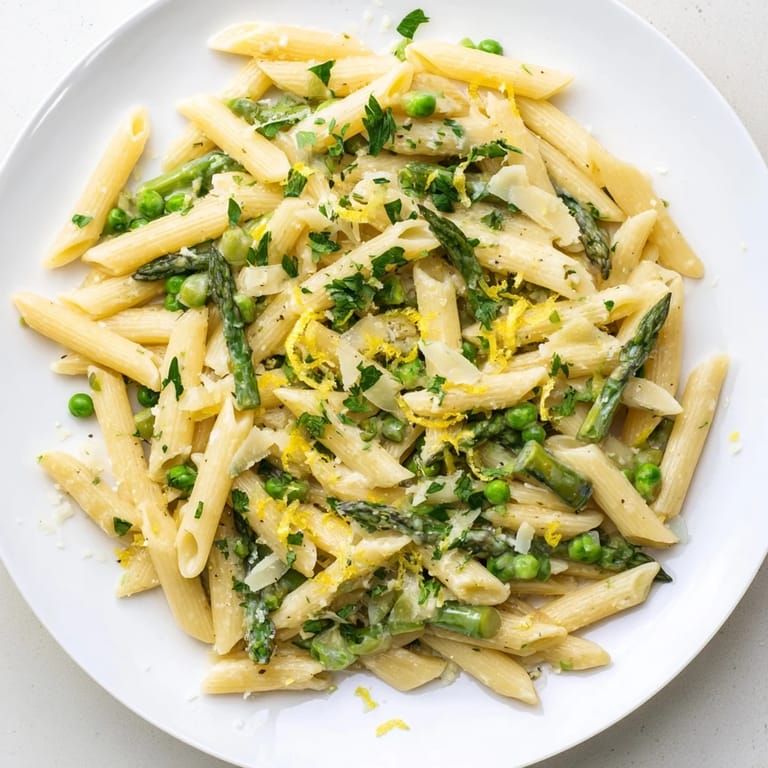
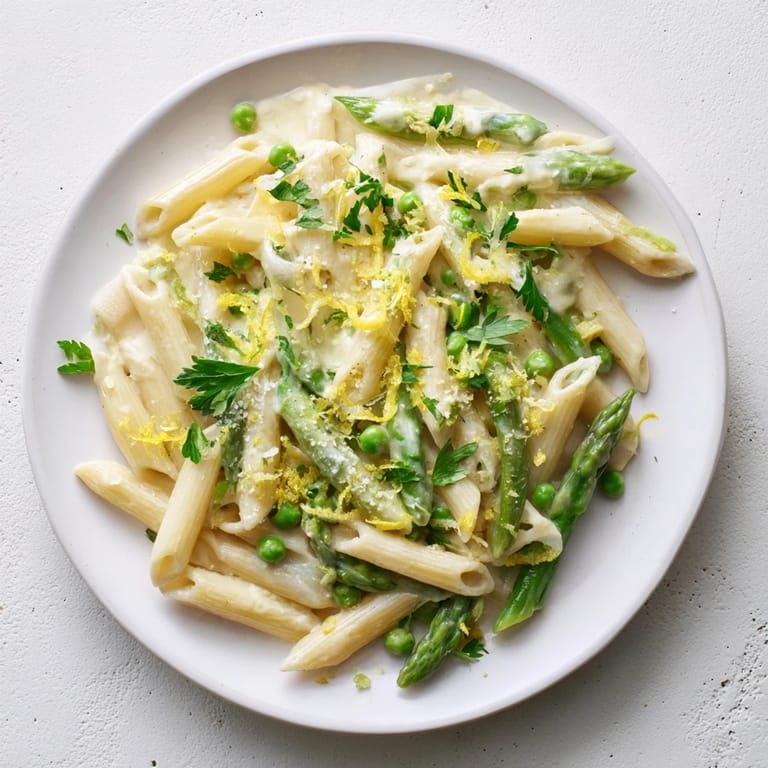
- Serve the pasta immediately in bowls, topped with extra grated Parmesan and freshly chopped basil or parsley for a pop of color.
 Save
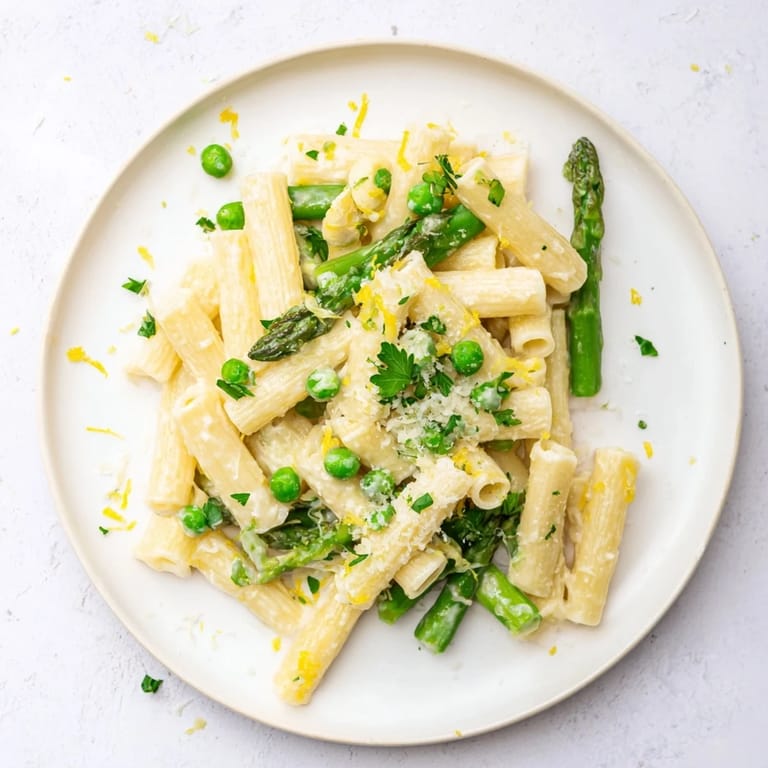
Save This pasta became my go-to for spring potlucks after three different friends requested it for their birthdays. Something about the combination of tender vegetables, creamy sauce, and bright lemon makes people feel like they're eating something special without realizing how simple it was to make.
Choosing Your Spring Vegetables
I've learned that the best vegetables for this dish are the ones that look fresh at the market, not necessarily what's on my original list. Sugar snap peas work beautifully instead of green beans, and sometimes I throw in some chopped zucchini if I have it. The key is cutting everything into similar sizes so they cook evenly and maintaining that vibrant green color that makes spring cooking feel so alive.
Getting the Sauce Right
The first time I made this, I added the cream to a pan that was too hot and it separated into a grainy mess. Now I always pull the skillet off the heat for a minute before pouring in the cream, then return it to low heat. This gentle approach keeps the sauce smooth and creamy. I've also found that grating the Parmesan finely helps it melt more evenly, creating that restaurant-quality coating on every piece of pasta.
Making It Your Own
Sometimes I add a handful of baby spinach during the last minute of cooking for extra color and nutrition. Other times, I'll toast some pine nuts or walnuts in a dry pan while the pasta boils and sprinkle them on top for crunch. The recipe is forgiving enough that you can play with it based on what you have or what sounds good.
- Try adding fresh mint along with the basil for a surprisingly good spring flavor combination
- A pinch of red pepper flakes in the garlic oil adds just enough warmth to balance the cream
- If you're meal prepping, undercook the vegetables slightly since they'll soften when reheated
 Save
Save This pasta tastes even better as leftovers, if that's even possible. The flavors meld together overnight, and I've been known to eat cold bites straight from the fridge for breakfast.
Recipe Questions & Answers
- → Can I use frozen vegetables instead of fresh?
Yes, frozen vegetables work wonderfully in this dish. Use thawed asparagus, peas, and green beans to maintain the creamy sauce texture. Add them directly to the skillet without additional thawing.
- → How do I prevent the cream sauce from breaking?
Keep the heat low when adding cream and cheese. Stir constantly and avoid boiling. The reserved pasta water helps create a silky sauce; add it gradually while tossing to achieve the perfect consistency.
- → What can I substitute for heavy cream?
Half-and-half creates a lighter version. For dairy-free options, use plant-based cream or a combination of vegetable broth with cashew cream for richness without traditional dairy.
- → Can I make this ahead?
Prepare vegetables and sauce components in advance, but cook the pasta fresh before serving. Combine pasta with sauce just before eating to maintain the ideal texture and prevent mushiness.
- → How do I add more protein to this dish?
Toss in cooked chicken breast, grilled shrimp, or crispy pancetta. Add chickpeas or white beans for a vegetarian protein boost. Pine nuts scattered on top provide nutty flavor and crunch.
- → What wine pairs well with this pasta?
A crisp Pinot Grigio or Sauvignon Blanc complements the light, creamy sauce beautifully. The acidity cuts through the richness while enhancing the fresh lemon and herb flavors.